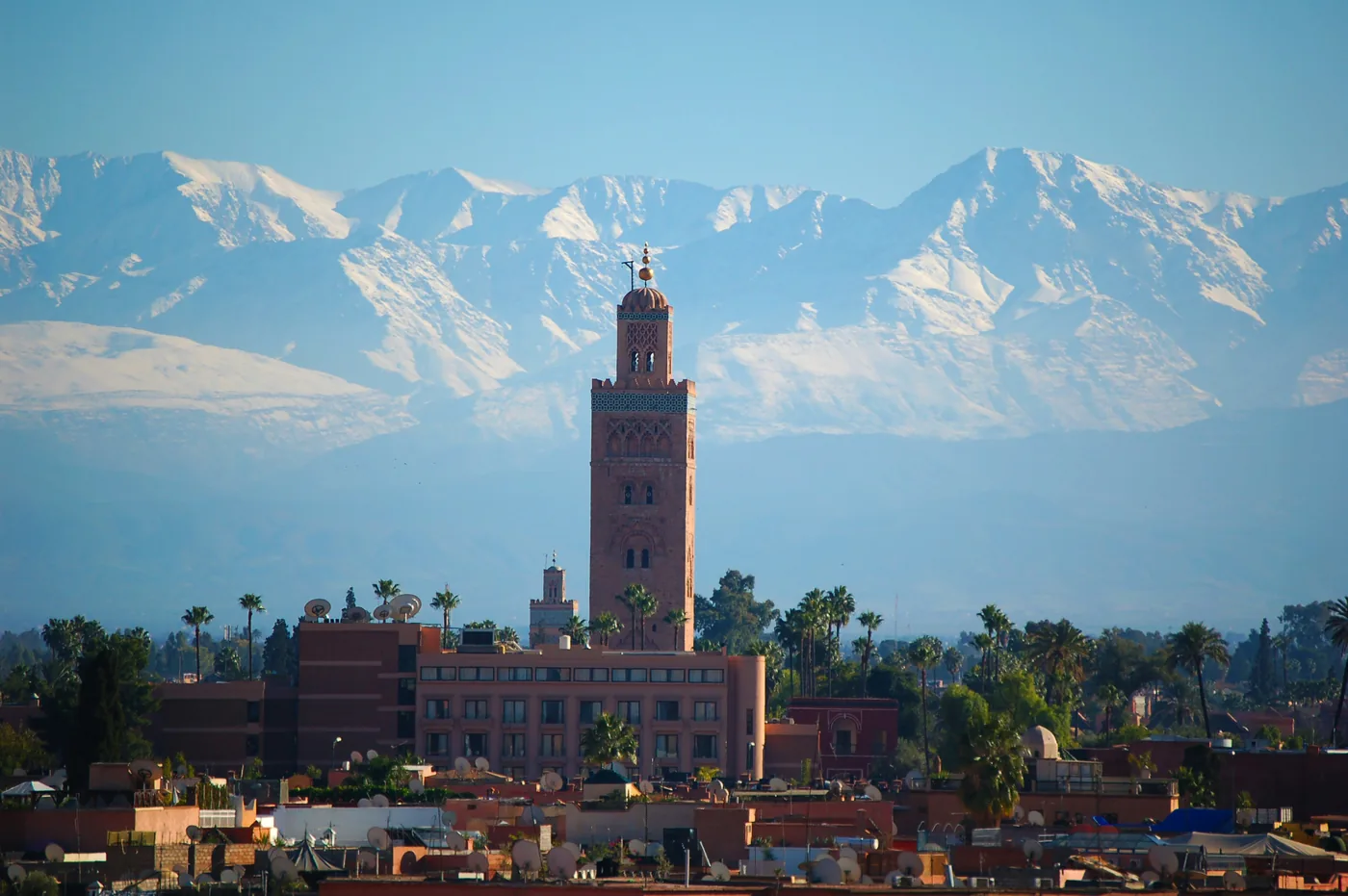
October and April are the two best months to visit Marrakech — temperatures between 22–28°C, manageable tourist numbers, and the city functioning at its full range. October edges ahead for most travellers: post-summer quiet, lower prices, and the Atlas foothills still green from late-season rain.
The short version, by season
Month by month
January — Cold, quiet, cheap
Average highs: 18°C. Nights: 5–6°C. January is Marrakech's quietest month and its coldest. Hotels run at low occupancy; prices reflect that — a riad that costs €150 in October may cost €70. The souks are unhurried. The downside is real: cold riads (many unheated), rain possible, outdoor dining limited. Best for people who specifically want the cultural experience without the tourist volume.
February — Almond blossom in the Atlas
Similar to January in temperature (highs 20°C, nights 7°C), with the addition of the almond blossom season in the Atlas foothills — worth a day trip if timing aligns, usually late January to mid-February. Still quiet, still cold at night.
March — The turn
March is when Marrakech becomes comfortable again: 22–24°C days, 10–12°C nights, increasing daylight. Tourist numbers begin rising but haven't peaked. Good window for those who want spring weather without the Easter crowd. The medina gardens (Majorelle, Menara) are at their best.
April — Spring peak
25–27°C, long evenings, the Atlas still green. The most popular month, which means the most crowded. European school holidays drive significant tourist volume in mid-to-late April. Everything is open, everything is running, and the queues at Majorelle will be longer than you want. Book riads well in advance. Good month if you plan carefully; not the hidden secret it once was.
May — Late spring, before the heat
27–30°C days, warm evenings. Tourist numbers ease from April's peak. A solid month with minimal tradeoff — warm enough for outdoor dining, cool enough for walking the medina without suffering. Increasingly overlooked, which keeps prices reasonable.
June — The shift
33–36°C by mid-June. Still manageable in the mornings and evenings; the 11am–3pm window becomes difficult. The tourist crowd thins noticeably. Good for travellers who adapt their schedule around the heat and want a quieter city.
July–August — Full summer
38–42°C average highs, occasional spikes above 44°C. This is Marrakech's hardest season for tourists. The mechanics: mornings (7–10am) are fine, midday brutal, evenings after 7pm genuinely pleasant at 25–27°C. Riads with pools become essential rather than optional. Night markets, evening dining, and the Jemaa el-Fna after dark are highlights of this season specifically. Not recommended as a first visit unless you have no other option.
September — Recovery
35–38°C early in the month, dropping to 30°C by late September. The transition month. Summer heat lingering, crowds already thinning. Affordable and increasingly comfortable as the month progresses. The second half of September is underrated.
October — The best single month
25–28°C days, 14–16°C nights. Summer tourists gone, Christmas tourists not yet arrived. The medina is at a functioning pace rather than a tourist pace. Prices are lower than spring. The Atlas foothills receive late-season rain and turn green. Restaurants have their full menus. Rooftops are comfortable until 10pm. If you can only go once and you have a choice, go in October.
November — Quiet autumn
22–24°C days, 10–12°C nights. Tourist numbers at autumn low. Similar profile to March — comfortable, affordable, unhurried. A strong month that gets little attention in the standard guides because there's no single peak moment to describe.
December — Pre-Christmas spike, then quiet
18–20°C days, 7–8°C nights. The period 20–31 December sees a significant European tourist surge (Christmas market travellers, New Year's). Outside that window, December is quiet and cold. If travelling in December, either avoid the last ten days or book very early and budget for premium pricing.
Marrakech during Ramadan
Ramadan dates shift by roughly 11 days each year (it follows the Islamic lunar calendar). In 2026 it falls approximately 18 February–20 March. The city during Ramadan operates on a different rhythm: slower in daytime, dramatically alive at iftar (sunset meal) and through the night. Most medina restaurants close until after iftar; Guéliz restaurants catering to tourists generally remain open for lunch. Jemaa el-Fna at night during Ramadan is one of the more distinctive experiences Marrakech offers. It requires adjusting your schedule, not avoiding the city.
Planning a Marrakech trip around specific dates? Kech Edit generates a free personalized itinerary matched to your dates, group and travel style →
Frequently asked questions
What is the best month to visit Marrakech?
October for most travellers: 25–28°C days, post-summer quiet, lower prices than spring. April is the other peak pick — similar temperatures, but heavier tourist numbers during European school holidays.
Is Marrakech too hot in summer?
July–August average 38–42°C. Outdoor activity between 11am and 4pm is uncomfortable. The city adapts — early mornings and evenings after 7pm are genuinely pleasant. Manageable if you structure your day around the heat; not ideal as a first visit.
What is Marrakech like during Ramadan?
Slower days, dramatically alive evenings. Most medina restaurants close until iftar (sunset); Guéliz options remain open. Jemaa el-Fna at night during Ramadan is exceptional. It requires adjusting expectations, not avoiding the city.
When is Marrakech least crowded?
January–February and late August–September. Winter is cold (5–8°C nights) but the souks and cultural sites are at their most accessible. Late August has the heat without the crowds — useful if you specifically want a quiet city.
Does it get cold in Marrakech?
Yes. December–February nights drop to 5–8°C. Traditional riads can be cold inside without heating — check your accommodation before booking in winter. Days are usually sunny and around 18–20°C.