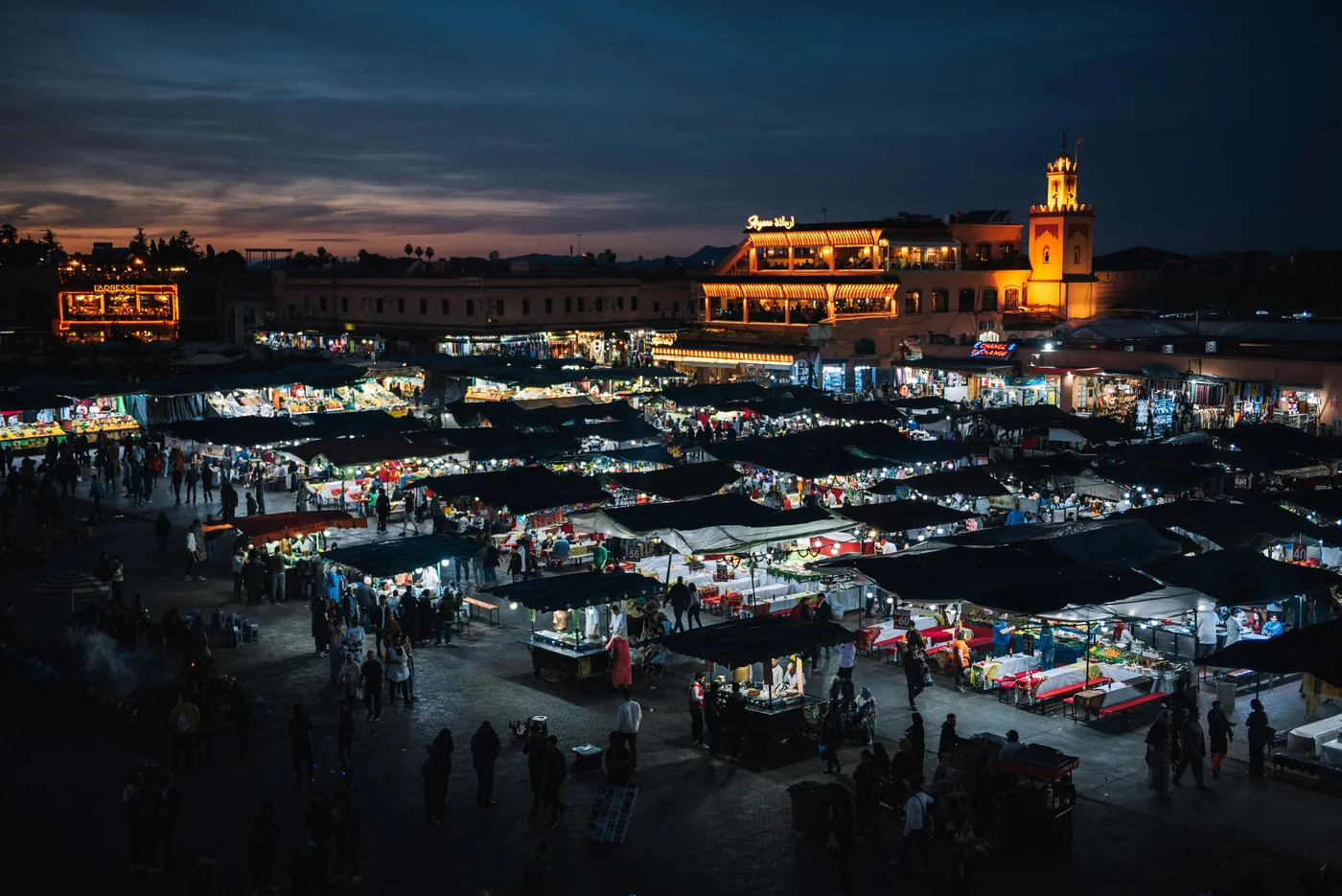
Marrakech is safe for tourists. The realistic concerns are petty hassle and scams rather than violent crime. The city receives over 3 million tourists annually, has significant police presence in tourist areas, and a well-developed tourism infrastructure. Here is what the safety picture actually looks like, without the marketing gloss or the anxiety-inflating travel forum version.
The actual crime picture
Violent crime against tourists in Marrakech is rare. Morocco's overall tourist safety record is among the better ones in Africa and the Middle East. Marrakech specifically has a Tourism Police (Brigade Touristique) presence in the medina and Guéliz, and tourist complaints are taken seriously partly because the tourism economy matters significantly to the city — it represents roughly 20% of Marrakech's GDP. Pickpocketing in crowded areas (Jemaa el-Fna, main souk arteries) is the most relevant crime concern and is addressed by standard precautions.
The real daily friction: hassle and scams
The legitimate complaint about Marrakech safety is not crime — it's the commercial pressure in tourist areas. Three scenarios to know:
The "helpful guide"
A friendly local offers to show you a specific building, shortcut, or free sight. The walk ends at a carpet shop, leather tannery viewing platform, or cousin's restaurant, with an implicit or explicit expectation of purchase or payment. This happens predictably near the main tourist sites. Response: politely decline at the start, or walk away at the end without obligation. No payment for unsolicited guidance is owed.
Jemaa el-Fna performers
Snake charmers, henna artists, and some musicians on Jemaa el-Fna will approach you. Engage with any of them and you will be asked for payment — typically 50–200 MAD for a few minutes of interaction. This is their livelihood and not unreasonable, but the price is not negotiated in advance. Approach by looking rather than touching or posing, and keep moving if you don't want to pay.
Souk pressure
Some souk vendors create social pressure around entering their shop — touching your shoulder, physically leading you inside, making leaving feel rude. This is a tactic. You are not obligated to stay, buy, or explain yourself. Standing up and leaving is enough. No situation in the souk requires you to hand over money you don't want to spend.
Safety for specific travellers
Solo women
Street attention (comments, following) is more common in Marrakech than in northern European cities. It is largely verbal rather than physical. Practical measures: confident body language, conservative dress in the medina (shoulders covered, knees covered), avoiding quiet alleys after dark, and using taxis after 10pm rather than walking alone. The majority of solo women who visit Marrakech report the experience as manageable rather than genuinely problematic.
LGBTQ+ travellers
Same-sex relations are illegal in Morocco under Article 489 of the Penal Code, carrying potential prison sentences. In practice, tourists are rarely targeted, but public displays of affection between same-sex couples draw attention and carry risk. Discretion is strongly advisable.
Basic precautions
Keep a photocopy of your passport separate from the original. Use a hotel safe for valuables. Don't display expensive cameras or phones in crowded areas. Know your riad's address and GPS coordinates before leaving — the medina without a working phone is more confusing than it needs to be. Drink bottled water rather than tap water. The food at Jemaa el-Fna food stalls is generally safe; the orange juice is reliably excellent.
A Marrakech itinerary matched to your travel style: Kech Edit builds one free in under 60 seconds →
Frequently asked questions
Is Marrakech safe for tourists in 2026?
Yes. Over 3 million tourists annually, significant police presence in tourist areas, violent crime against tourists rare. The concerns are petty hassle and scams — standard urban precautions address most of it.
Is Marrakech safe for solo women?
Broadly yes. Street attention is more common than in northern Europe. Violent assault is rare. Confident body language, conservative dress in the medina, and taxis after dark address most friction. Most solo women who visit report it as manageable.
What are the most common scams?
Unsolicited "helpful guides" who lead you to shops, Jemaa el-Fna performers who expect payment after interaction, and souk vendors who create pressure to stay and buy. None are dangerous; all are addressed by firm, polite refusal.
Is it safe to walk at night?
Main medina areas around Jemaa el-Fna are safe and busy until 10–11pm. Quiet alleys are worth avoiding alone. Guéliz is safe and more anonymous. Taxis are inexpensive for longer distances after dark.